
Earlier this year, Jaimie and the Sinope team made a deliberate decision to move fast. There was pressure to onboard customers. The product needed a better user experience. So the team undertook a UI overhaul, knowingly accruing technical debt in exchange for speed. That trade-off is familiar to most founders. What was less familiar was the specific way things broke.
The change failure rate started climbing. Features that had been stable for weeks began failing. Not new features. Existing ones. The kind that had already been tested, refined, and trusted. The kind you stop worrying about.
That is when the real lesson became clear. In an agentic workflow, the debt you accrue is not just in the code. It is in the product itself.
When Product Debt Looks Like a Testing Problem
In a traditional software project, technical debt means code that works but is fragile, hard to maintain, or poorly structured. In 2022, that was the whole definition. You clean it up, you refactor, you move on.

In an agentic workflow, something different happens. The AI agents building your product are not just reading your code. They are reasoning from your product specification. They are using your definitions of what the product is and what it should do to make decisions about what to change, what to protect, and what is safe to move.
When you redefine the user experience loosely, under time pressure, without constraining what must remain stable, you are not just leaving messy code. You are leaving ambiguity in the product model itself. And the agents will fill that ambiguity. Not maliciously. Not randomly. They will fill it with something reasonable that does not match what you actually intended.
That is product debt. Bad product specifications, not just bad code. And it produces technical instability and less deterministic outcomes in ways that are genuinely harder to trace than a straightforward regression.
Jaimie's team moved from a loosely defined workflow to a more structured, wizard-style guided flow. The direction was right. The intent was clear at the principle level. But the constraints on what the new experience had to preserve were not tight enough. Previously stable functionality broke because the agents had no clear signal that those parts were load-bearing. They were not told to leave them alone, so they did not.
The saving grace was that this happened entirely in staging. Nothing reached production. The discipline of the release process protected customers. But the cost of the mistake was still real.
Why You Pay the Debt Twice
The intuitive cost of moving fast with loose specifications is the rework. You build something, it does not work as intended, you fix it. That is one payment.
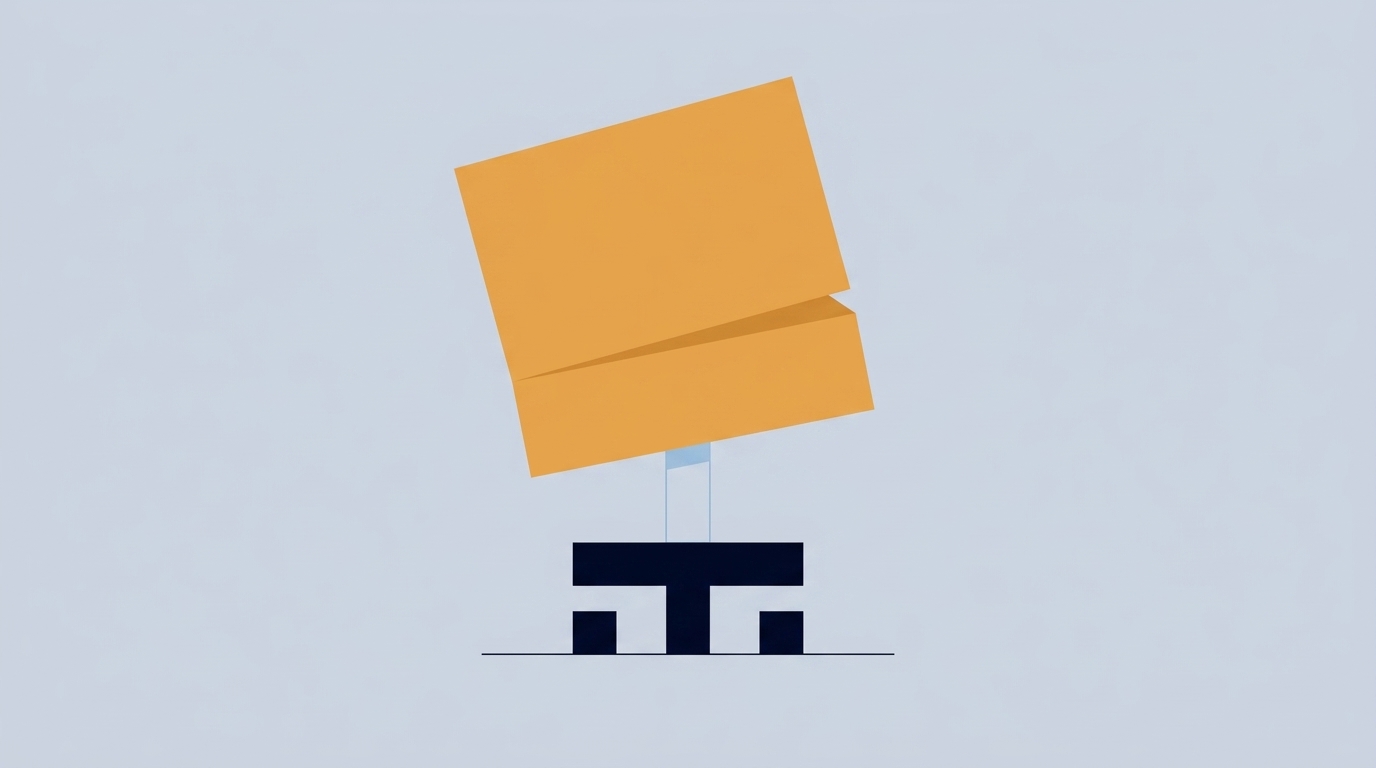
The less obvious cost is that you also have to go back and add the specificity you skipped in the first place. You have to define the constraints that should have existed before any agent touched the product. You have to rebuild the product model with the precision that time pressure told you was optional.
That is the second payment. First the refactoring. Then the specification work you avoided. You cannot skip the second payment just because you completed the first one. In an agentic workflow, you cannot get to a stable, deterministic product without precise definitions. Moving faster by specifying less is not actually moving faster. It is borrowing velocity from your future self at a high interest rate.
This matters more in a regulated product than almost anywhere else, and the reason is specific.
The Auditor Will Not Accept "The AI Said Yes"
Sinope operates in a compliance-adjacent space. The product helps founders and small B2B teams prepare for ISO 27001, the international standard for Information Security Management Systems (ISMS). The people using the product are preparing for scrutiny, for procurement reviews, for certification processes run by independent certification bodies.
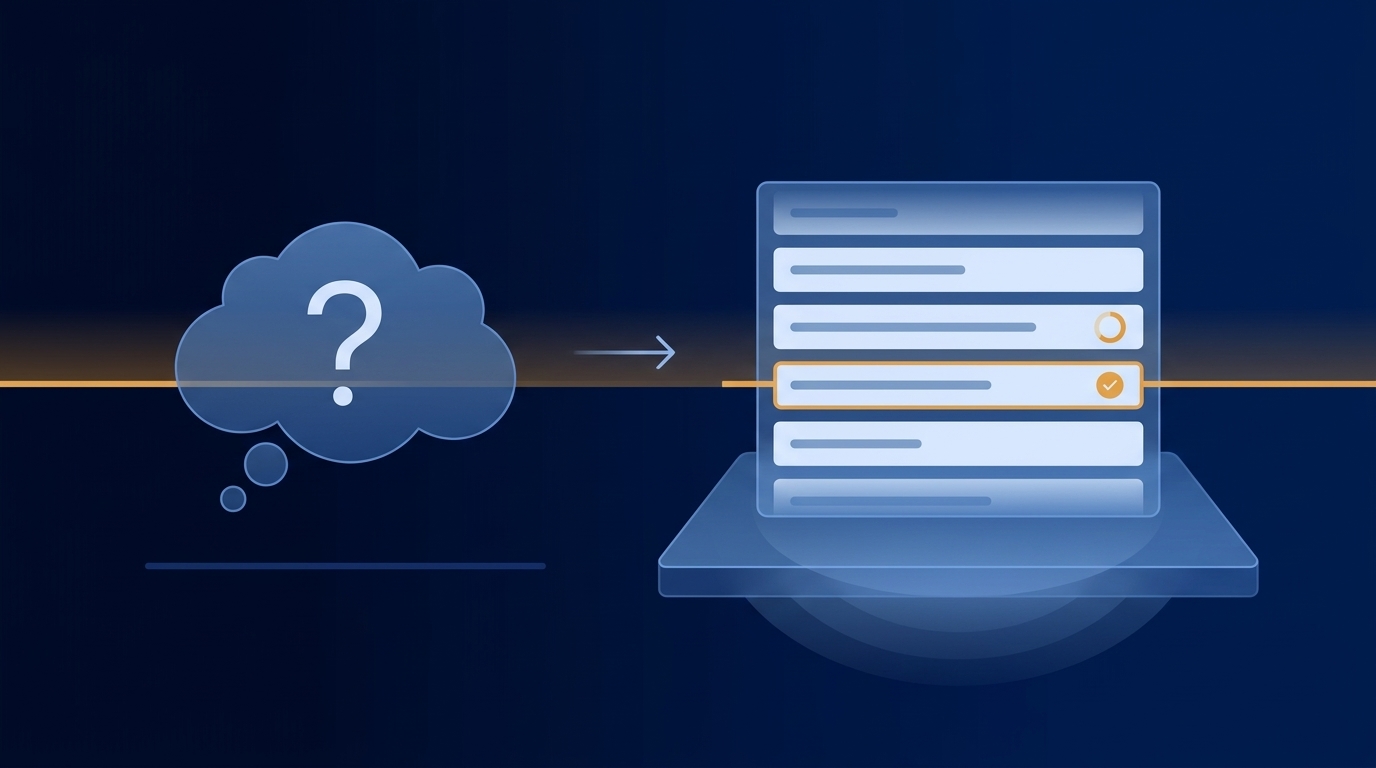
In that context, the UI is not a surface-level concern. It is the foundation.
An auditor will never review your codebase and accept an AI's internal confidence as evidence. You cannot show a conversation thread with an LLM saying "yes, you are compliant" and expect that to satisfy a requirement. What matters is the structured, traceable artifact: the record that shows what happened, who owns it, and what it supports.
That is why Sinope moved toward a more wizard-style guided flow rather than a looser agentic interface. Not because the AI capability was insufficient. Because the output of the process has to be something a human reviewer can examine, follow, and rely on. The UI is the mechanism that produces that artifact. It is not optional. It is not a nice-to-have for a later sprint.
This shapes the entire design constraint. When you are building in a regulated space, the compliance evidence your product generates has to be legible to a person who was not in the room when it was created. That legibility comes from structure. That structure comes from a precise product definition. Loose specifications make the structure unpredictable, and unpredictable structure produces evidence that no one can rely on.
Specificity Is Not a Slowing Force
There is a version of this lesson that sounds like it is telling you to slow down. That is not the lesson.
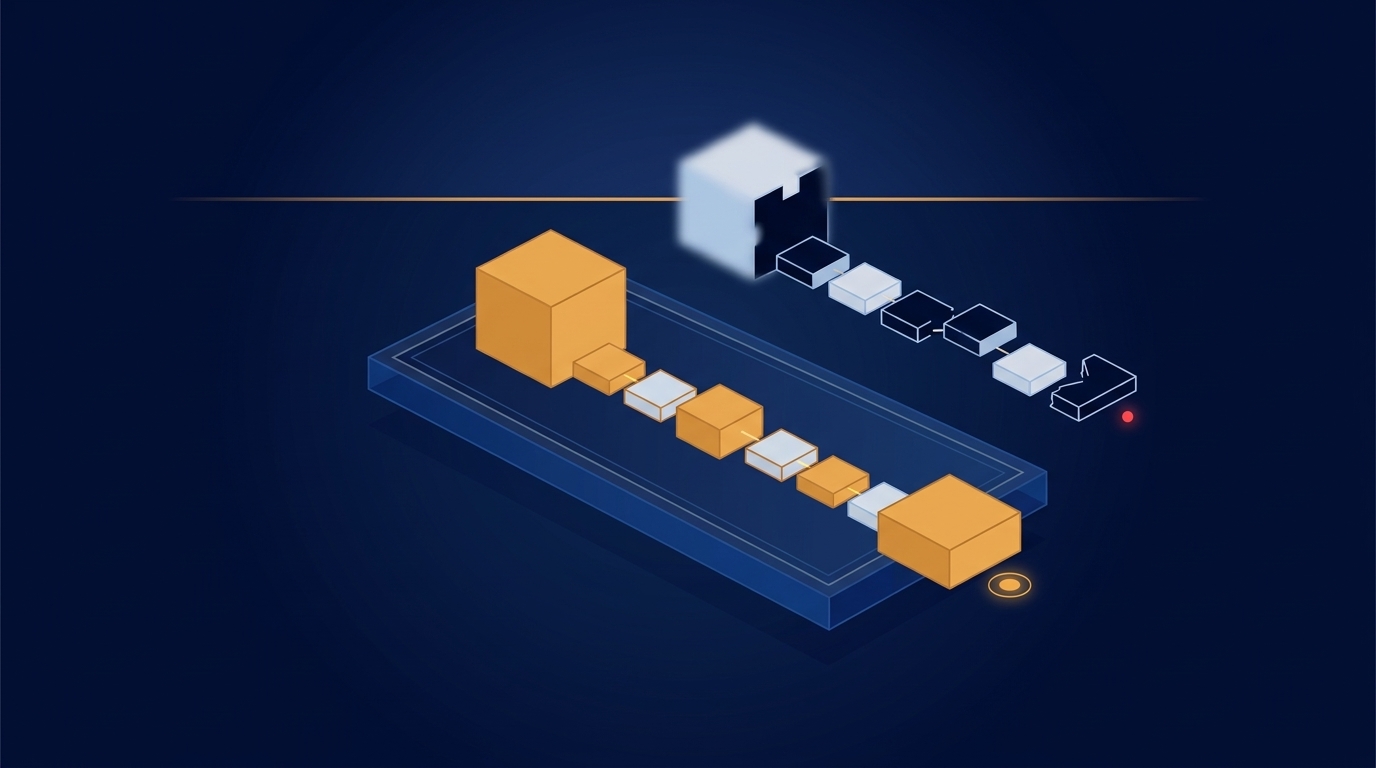
The lesson is that in an agentic workflow, specification work is delivery work. It is not a phase before the real work. It is not documentation for its own sake. It is the input your agents need to produce the output you actually want. Skipping it does not remove it from the critical path. It moves it downstream, where it costs more.
Jaimie made this point clearly: you cannot go faster by being less specific. Not in this environment. The non-deterministic nature of LLM-driven development means that any gap in your product definition is a surface where an agent can produce something reasonable but wrong. The more load-bearing the feature, the more expensive that wrongness is to find and correct.
For founders building AI products in compliance-driven spaces, this constraint is doubled. Over-scoping or under-specifying your product scope causes problems on both the engineering side and the evidence side. The evidence your product produces has to match what your specification says it should produce. When those two things diverge, you do not just have a testing problem. You have a product problem.
The change failure rate that Jaimie's team saw during the UI overhaul was a signal from the product itself. It was saying: the definition is not tight enough to protect what already works. Stable things had become unstable not because of careless code changes, but because the agents had no clear model of what "stable" meant in the new experience.
Catching that in staging, not in production, was the outcome of good process discipline. But the right lesson is not just "test better." It is "specify tighter, before the agents build anything."
If you are building an AI product and preparing for ISO 27001 at the same time, the specification work and the compliance preparation are not separate concerns. Both depend on being precise about what your product does, what it produces, and what counts as a reliable record.
Sinope is in development. We are building guided interviews and evidence review to help small teams prepare for ISO 27001 without a dedicated GRC (Governance, Risk and Compliance) lead. Our target preparation fee is EUR 5,000. Independent audit fees and implementation costs are separate.
If you have a customer requirement in front of you and you want to understand what preparation actually involves, request a cost breakdown at sino.pe or bring your requirement to a 30-minute conversation. We start with what you actually need, not a generic checklist.