
A customer asks for ISO 27001. The instinct is to move fast and cover everything. That instinct is expensive.
Over-scoping your Information Security Management System (ISMS) is one of the most common budget problems we see in early-stage teams. It does not show up as a single line item. It shows up as documentation nobody uses, training sessions for people outside the relevant scope, and controls that do not map to any real customer requirement. By the time the cost is visible, a significant amount of time and budget has already gone.
This post separates the obvious preparation costs from the hidden ones that accumulate when the scope is wider than it needs to be.
What over-scoping actually looks like
Scope in ISO 27001 defines which parts of your business the ISMS covers: which products, which locations, which teams, and which processes. A well-defined scope is specific. It reflects what the customer actually asked for and what your organisation genuinely operates.
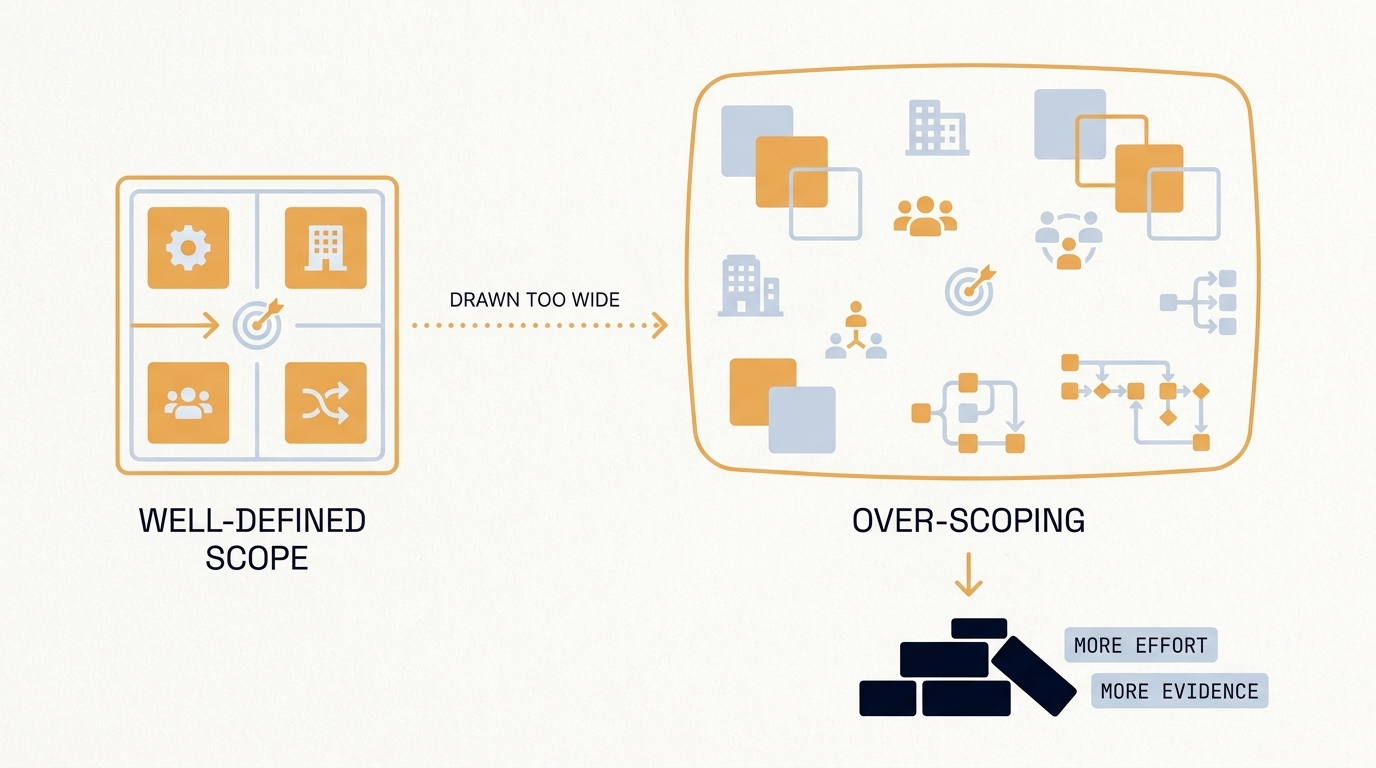
Over-scoping happens when that boundary is drawn too wide. A team covers three internal tools when the customer requirement only concerns one product. A startup lists five office locations when the relevant work happens in two. A founder includes departments that do not touch the data or systems the customer cares about.
None of these decisions feel wrong in the moment. Covering more feels thorough. It feels like good preparation. The cost becomes clear later, when the team has to produce evidence for controls they cannot actually demonstrate, or when the audit scope is broader than the work they prepared for.
The financial impact is not abstract. More scope means more documentation, more risk assessments, more controls to implement, and more evidence to collect and organise. Each of those items costs team time, and in a 12 to 35-person startup without a dedicated GRC lead, that time comes directly from product, sales, or engineering.
The costs that do not appear on the invoice
Preparation fees and independent audit fees are the costs most founders ask about first. They are real costs, and they deserve transparency. Sinope's target preparation fee is €5,000 EUR. Independent audit fees and implementation costs are separate. But these numbers only tell part of the story.
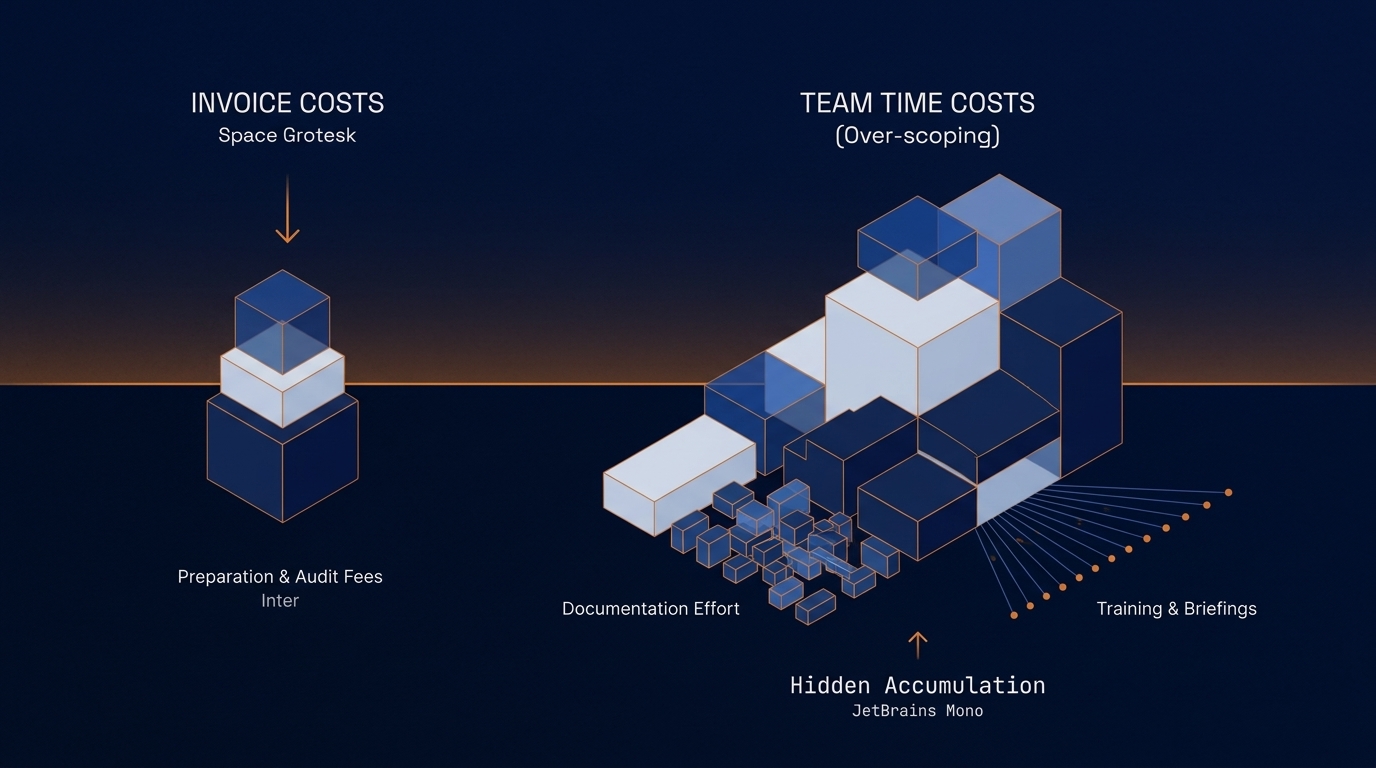
The costs that accumulate from over-scoping are less visible because they appear inside your existing team's working hours.
Documentation is the clearest example. An ISMS requires policies, procedures, and records. When the scope is too wide, the number of documents grows. A team that scope-creeps into five business areas instead of two does not write twice the documentation. In practice, the effort multiplies faster, because each additional area introduces new processes to describe, new owners to confirm, and new records to locate.
Training costs follow the same pattern. ISO/IEC 27001 expects that people who operate within the ISMS scope understand the relevant controls. If your scope includes teams that are not actually within the customer requirement, those teams still need to be briefed, documented, and potentially assessed. That is time and sometimes direct cost spent on people who do not affect the outcome the customer asked for.
Third-party assessments and technical controls are another category. Penetration testing, supplier due diligence, and access reviews are scoped to the systems and locations you declare. A wider scope means more systems to assess, more suppliers to review, and more access controls to document. If those systems are outside the real customer requirement, the additional spend does not reduce risk in any way the customer will measure.
Finally, there is audit time itself. Independent certification bodies charge based on the complexity and size of the scope. A broader scope means more audit days, which means higher fees. The audit fee is separate from Sinope's preparation fee, and it is not fixed. It varies with the scope your team declares.
How to define a scope that fits
The starting point is always the customer requirement. Before deciding what your ISMS covers, confirm exactly what the customer asked for: which product, which data, which locations, and by when. That question changes the preparation work significantly.
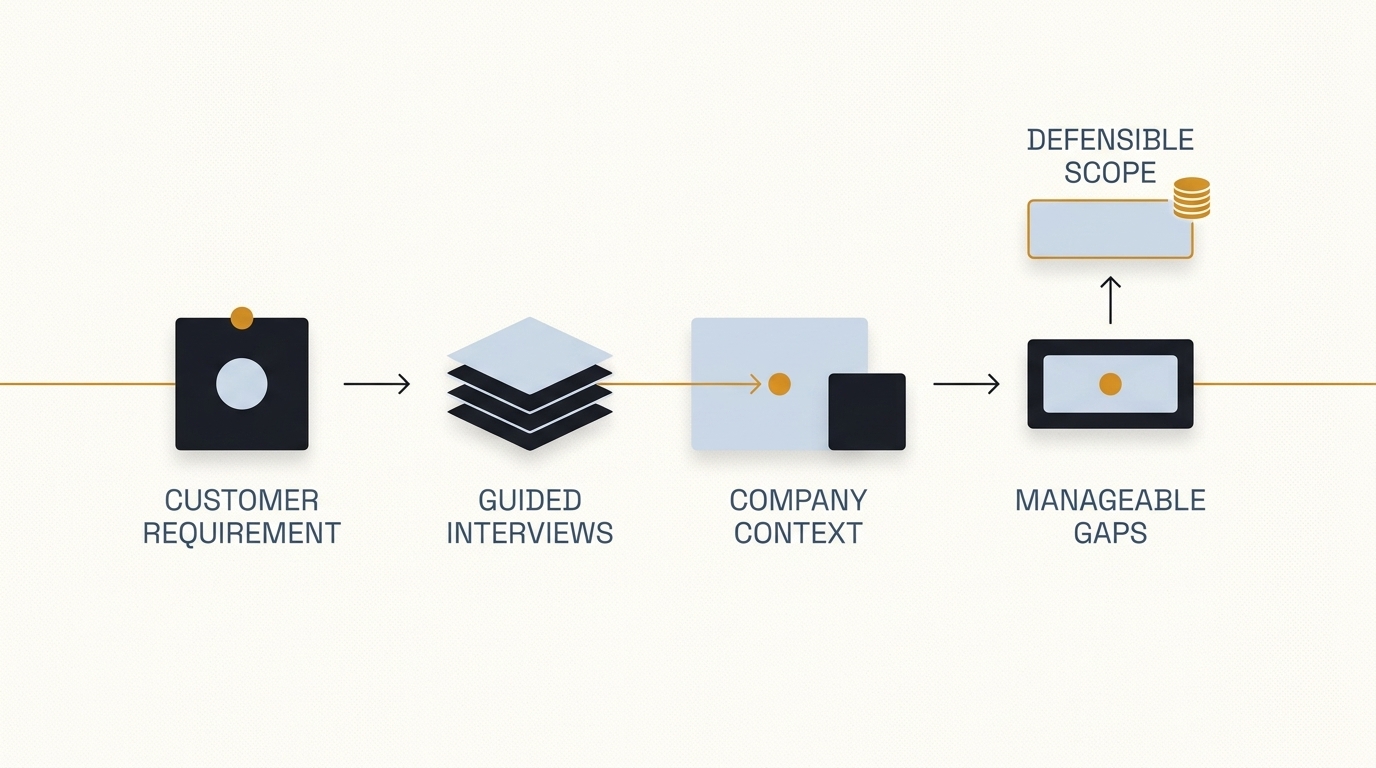
A customer security requirement does not automatically mean your entire company needs to be in scope. Most early customer requirements relate to a specific product or service. The ISMS scope should reflect that, with a clear boundary that you can explain and evidence.
Guided interviews help teams work through this precisely. At Sinope, guided interviews collect company context systematically: what your team does, where, with which systems, and who is responsible for which processes. That context is what makes a scope decision defensible. It is not a checklist. It is a structured conversation that surfaces what is actually relevant versus what sounds relevant.
The output is a clearer picture of what needs to be in scope, what existing practices already support it, and where the gaps are. A gap in a well-defined scope is manageable. A gap discovered during an audit in an over-scoped ISMS is more costly, because the team has to address it across a larger surface than the requirement ever demanded.
When you define scope tightly and correctly, you reduce the number of controls you need to implement, the volume of evidence you need to collect, and the number of audit days you pay for. That is not a shortcut. That is the appropriate preparation for the actual requirement.
Evidence over breadth
One pattern we see consistently: teams produce a large number of documents because a wide scope demands it, but the documents do not connect to dated records or named owners. An uploaded policy is not evidence that a practice occurred. It describes what should happen. The record shows what did happen, when, and who was responsible.
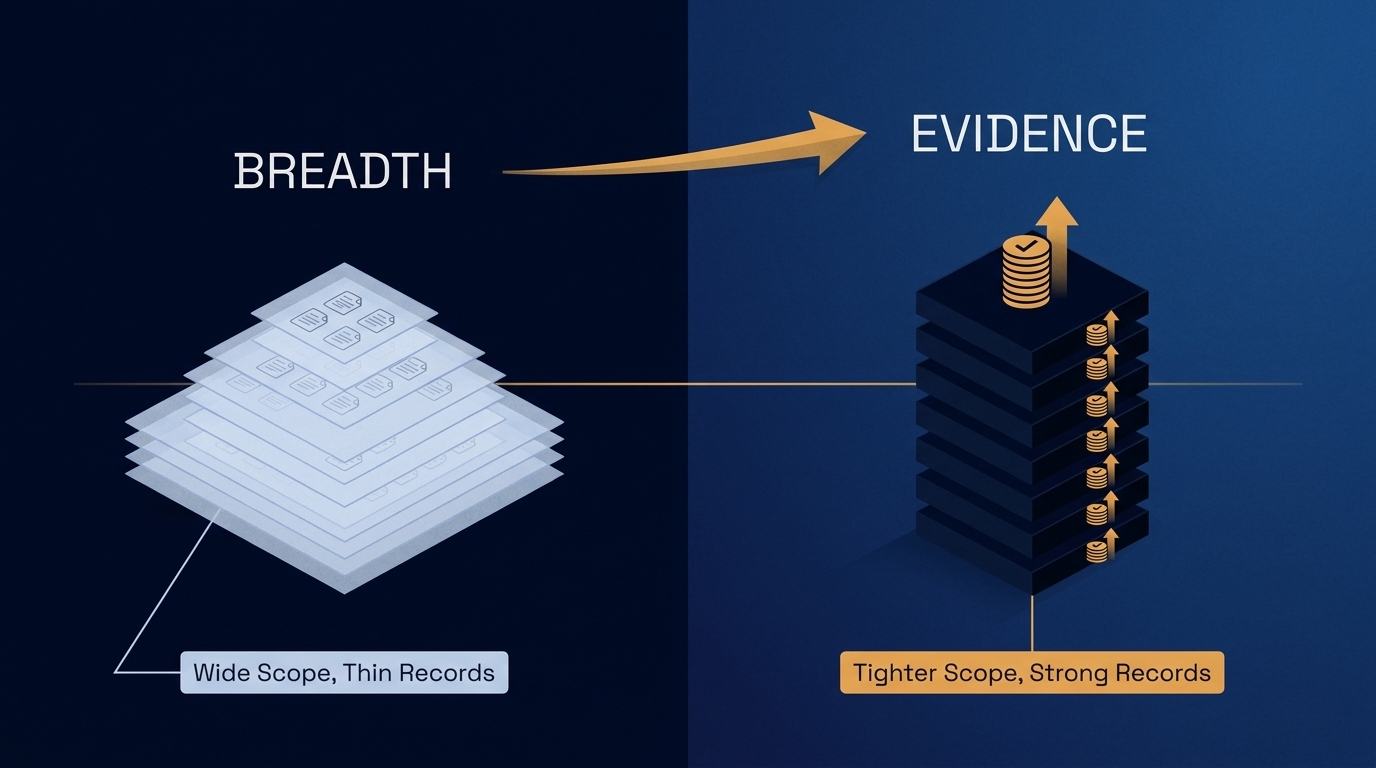
Over-scoping often leads to a situation where a team has produced a significant volume of material but has thin evidence across a broad surface. A tighter scope allows the team to focus that evidence effort where it matters, producing fewer documents with stronger records behind each one.
Organised evidence records also make the advisory review stage more useful. When a reviewer can see which claims are supported and which are not, the conversation becomes specific. It moves from "we think we are mostly ready" to "these three controls have complete records, and these two do not." That is the kind of visibility that helps founders make real decisions before committing to an independent audit.
The decision worth making early
Scope is not a detail to confirm at the end of your preparation. It is the decision that determines almost everything else: the cost, the timeline, the controls, the evidence, and the audit fee.
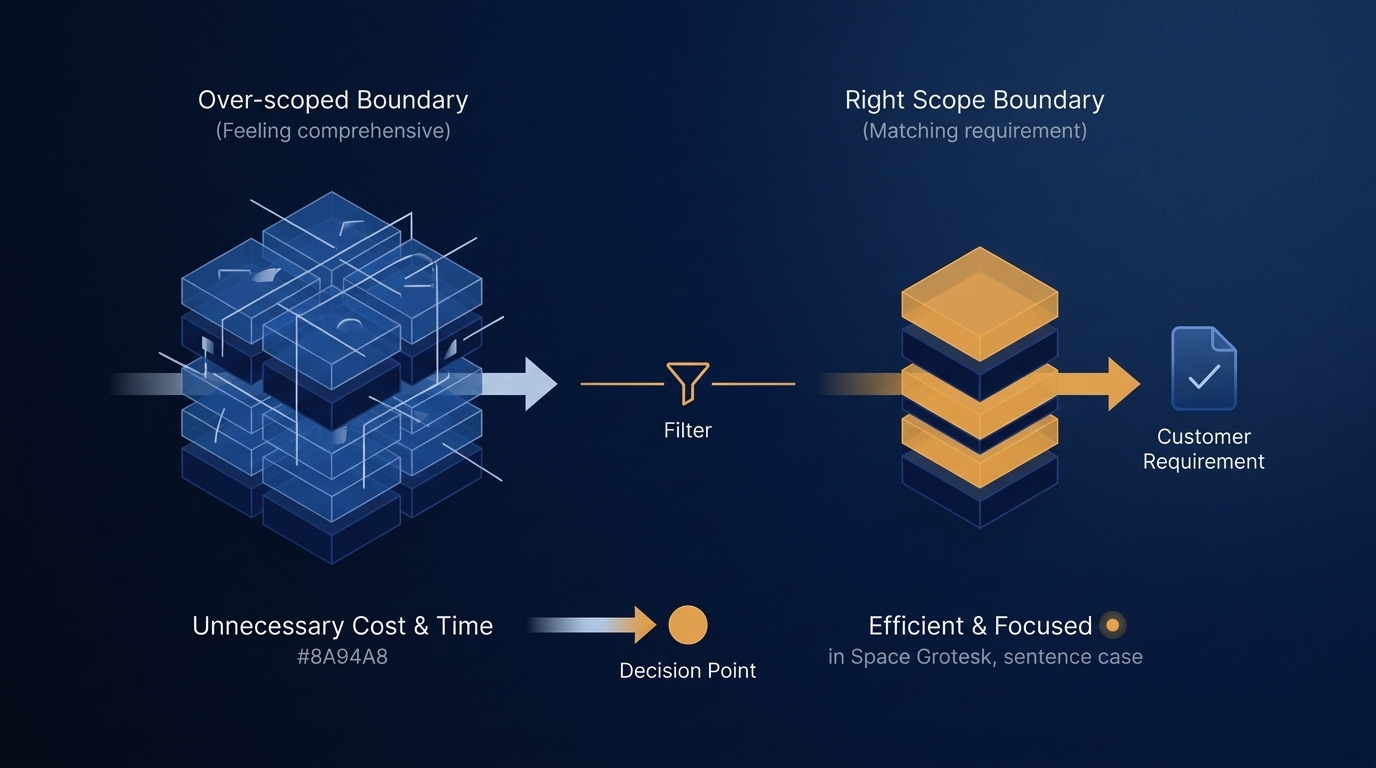
A startup that sets the right scope from the start avoids paying to prepare, document, train, and evidence areas that the customer did not ask about and that the certification body will not assess more favourably for including.
Bring the customer's requirement to the conversation before you set your scope. Confirm what it actually covers. Then draw the boundary that fits that requirement, not the boundary that feels the most comprehensive.
If you are starting to think through your ISO 27001 preparation costs, request a cost breakdown at sino.pe. We review each request before we reply, and we keep preparation fees separate from independent audit fees and implementation costs.