
I am a skeptical person by nature. I do not believe things until I see them. That quality has served me well in engineering, where assumptions get punished quickly and the code either runs or it does not. But that same skepticism made me slow to accept something that, in hindsight, was obvious: I had spent the better part of a year in a build trap, writing software without ever seriously asking whether anyone actually had the problem I was trying to solve.
That is not a comfortable thing to write. But it is the honest starting point for everything that followed.
The Build Trap Is Not About Bad Code
The build trap is not a technical failure. The code was fine. The architecture was fine. The problem was that I had confused building with making a business. Vibe coding is easy. You get into a flow, you ship features, you solve interesting problems, and you feel productive. The feedback loop is tight and satisfying. But a business requires a different kind of feedback loop entirely, one that runs through real people with real problems who would actually pay you to solve them.
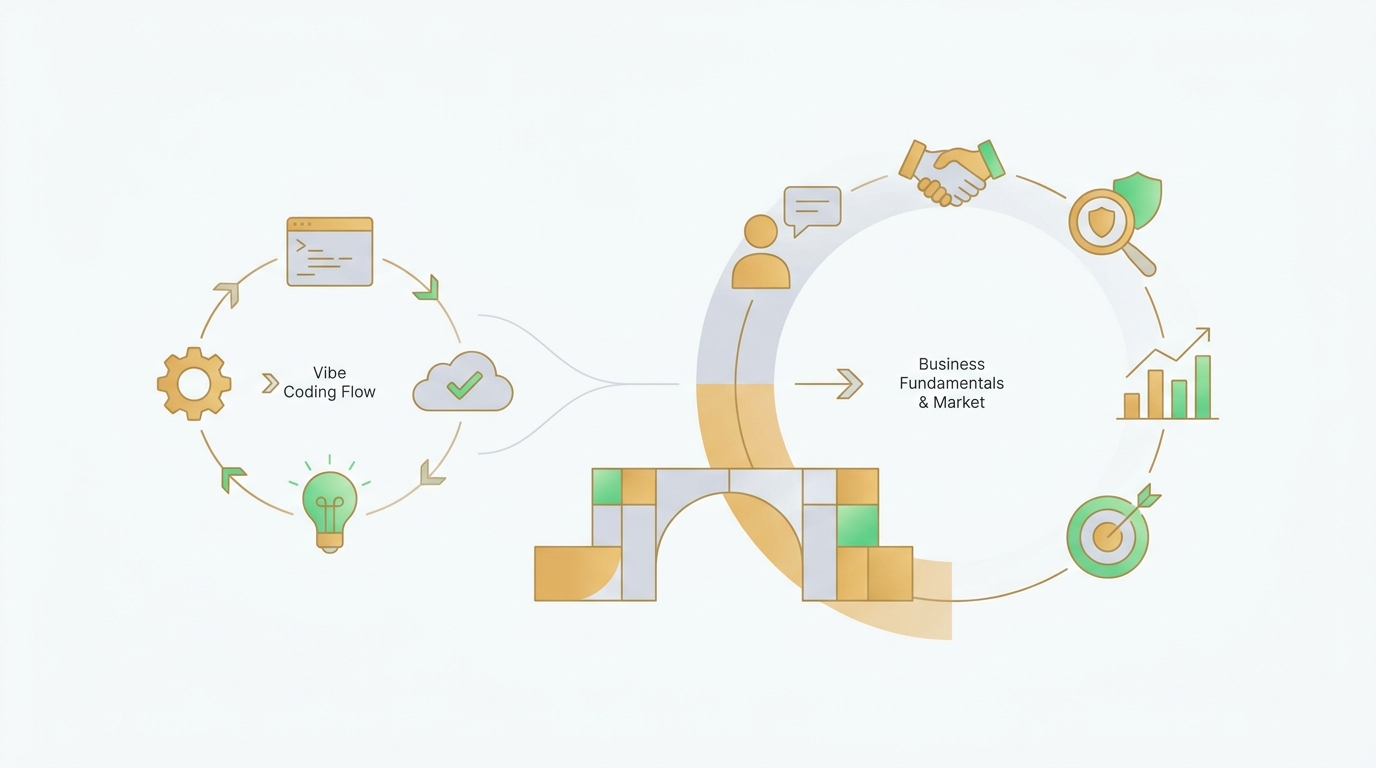
I did not fully understand that distinction until I went through Startup Supernova, an accelerator run by KLAK here in Iceland. What the program pushed me to confront was not my technical ability; it was whether I had considered my market position, whether I had a co-founders agreement, whether I had protected my intellectual property, and whether I actually understood who I was building for. It turned me from a vibe coder into someone trying to run a business. Those are different jobs, and the gap between them is larger than most technical founders want to admit.
The curriculum forced clarity in places I had been comfortable leaving vague. Market position. Business fundamentals. The mechanics of actually going to market rather than just going to GitHub. Halfway through the program, I attended Tech BBQ and shared ideas with international audiences for the first time. That was useful. But none of it was the turning point.
The Moment That Changed It
The turning point was a founder's lunch. It happened after a lecture called Start With One, taught by Daniel Ahmadizadeh of CrustData. The lecture was about the discipline of finding one customer, understanding one problem, and resisting the urge to abstract too early. I was there to listen, not to sell.
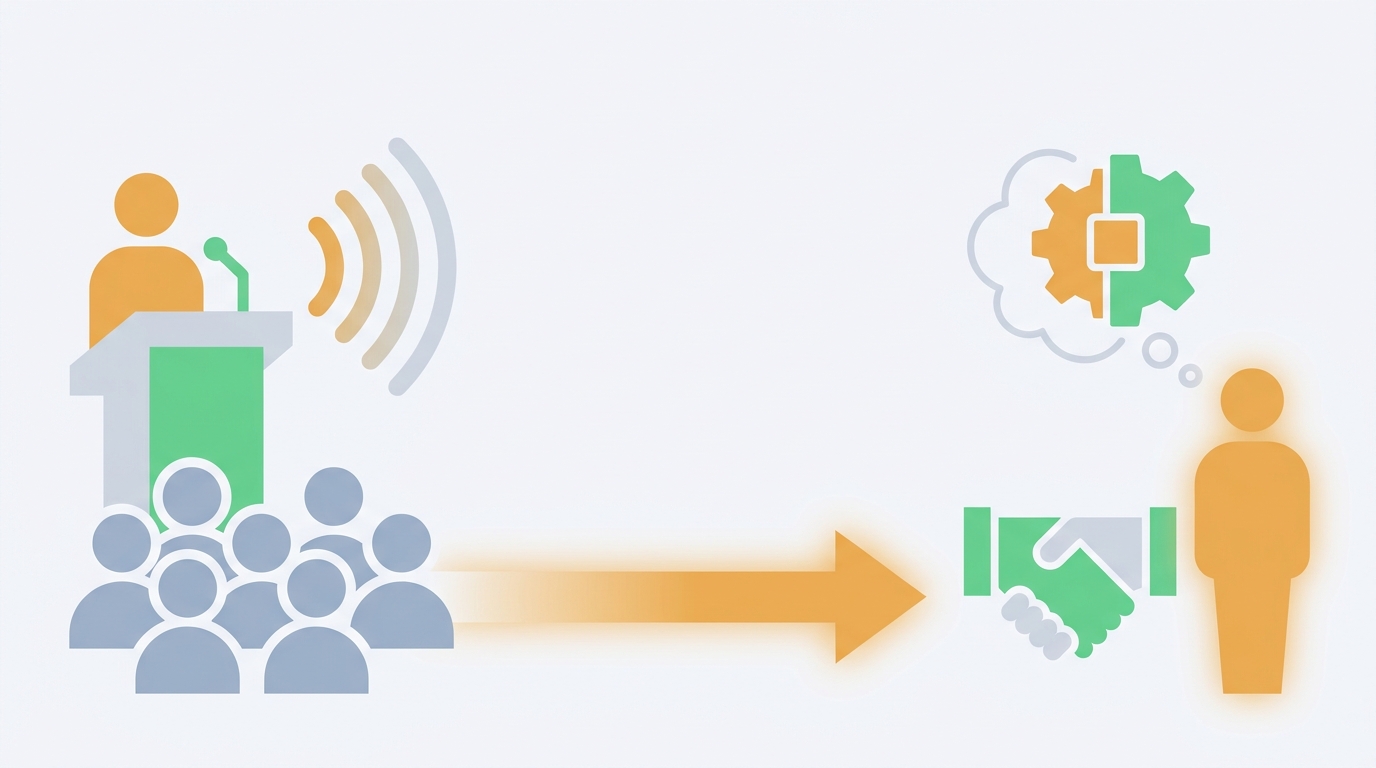
Then the founder leading the session turned to the room and said something like, "Is there a compliance startup here?" I did not immediately think he was talking to me. I am not sure why. Maybe because I still half-thought of Sinope as software rather than a business. But he was talking to me, and what he said next was: "We should talk after this. I need your help."
That is a strange way to find your first customer. You are sitting in a lecture, trying to focus on the content and the validation just arrives, unsolicited. I had not pitched him. I had not been networking aggressively. I was just present, and the problem found the solution in the room.
What made it land differently from other encouraging conversations was that it was not encouragement. It was a specific person with a specific need asking for help with something specific. That is the difference between someone saying "that sounds interesting" and someone saying "I need that." Only one of those tells you that you have made something real.
After that lunch, things moved. I sold to other companies in my cohort. The customers were not hypothetical anymore. And I finally believed, not because someone had told me to, but because I had seen it, that Sinope was not just more code. It was a product someone would pay for.
Never Stop Launching
I have been thinking about what I would tell a founder who is still stuck in that earlier version of me, building in earnest, passionate about the problem, using the product themselves, but not yet sure if it is a business.

I met someone recently who fit that description exactly. He had built a photography app. His wife used it. He used it. He loved it. It was technically solid and he was genuinely excited about it. When I asked him about launching, he said it was technically possible to do it that day. So I challenged him: do a lean canvas and launch today. Not next week. Not after one more feature. Today. Figure out the problem you are solving, figure out who you are solving it for, and then put it in front of people who are not you.
He did not launch that exact day. But the next time I bumped into him, he told me he was actively working through those steps. That counts. The point is not that you need to ship in a panic; it is that without identifying the problem and the person you are solving it for, you have personal software. You do not have a business.
Start With One is a more precise version of the same idea. Do not try to build for everyone. Do not abstract your customer into a persona before you have even spoken to a real one. Find the one. Understand their actual situation. Let that shape what you build next. The framework sounds simple because it is, but simple is not the same as easy, especially when every instinct you have as a technical founder is pushing you to scale the idea before you have validated it.
What I Know Now That I Did Not Know a Year Ago
A year ago I was repeating the same cycle: build, refine, build more, never quite launch, never quite ask. The product kept getting more complete and the customer list stayed at zero.
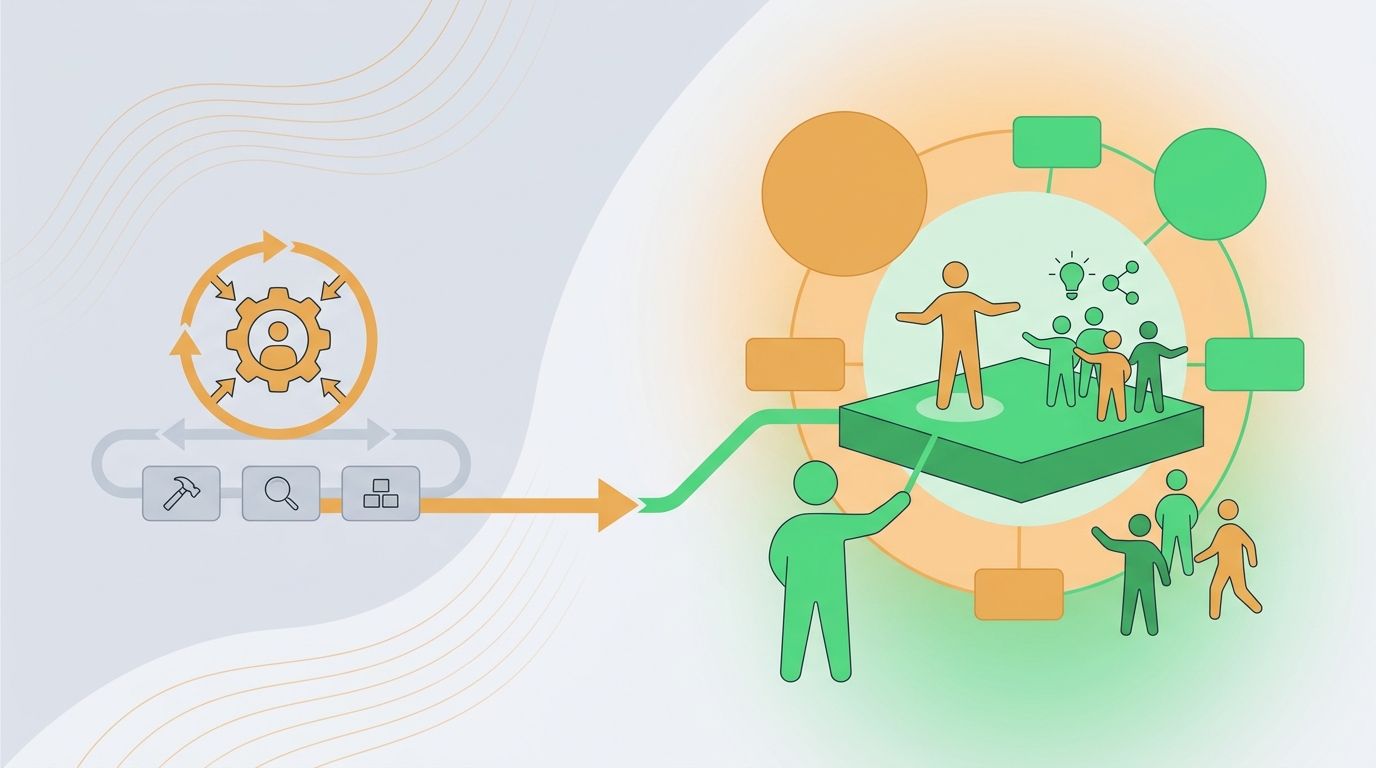
What Supernova gave me was not a new technical direction. It gave me the vocabulary and the structure to treat the market as seriously as I was treating the codebase. It gave me room to stand on stage at the end of the program and tell people who our customers were, not who we hoped they might be someday.
The compliance startup mentor did not approach me because I had the most polished pitch deck in the room. He approached me because the problem he had and the thing I had built were in the same room at the same time, and he was paying attention. That is what launching does. It puts you in the room. It makes you visible to the people who need what you have made.
So if you are reading this and you are still in the build trap, I am not going to tell you the code is the wrong place to start. Code is what we do. But at some point, probably sooner than feels comfortable, you have to stop building for the version of the customer you imagined and start building for the one who actually showed up.
Find that one. Then go find the next one.