A customer requirement lands in your inbox. It asks for ISO 27001 certification before the contract can move forward. Your first instinct is to move fast, and fast usually means expensive. You search for a consultant, get a quote that feels too high, or buy a tool that promises to do the work automatically. Neither approach tends to go well for a pre-seed team with twelve to thirty-five people and no dedicated GRC lead.
The goal here is straightforward: show you where the real costs come from, and explain the steps that reduce them without leaving gaps your auditor will find later.
Start with the actual customer requirement, not a generic checklist
Every ISO 27001 preparation project has a scope. That scope determines how much work you need to do, which controls apply, and what evidence you must produce. The single most effective cost-reduction step is defining that scope precisely before you do anything else.
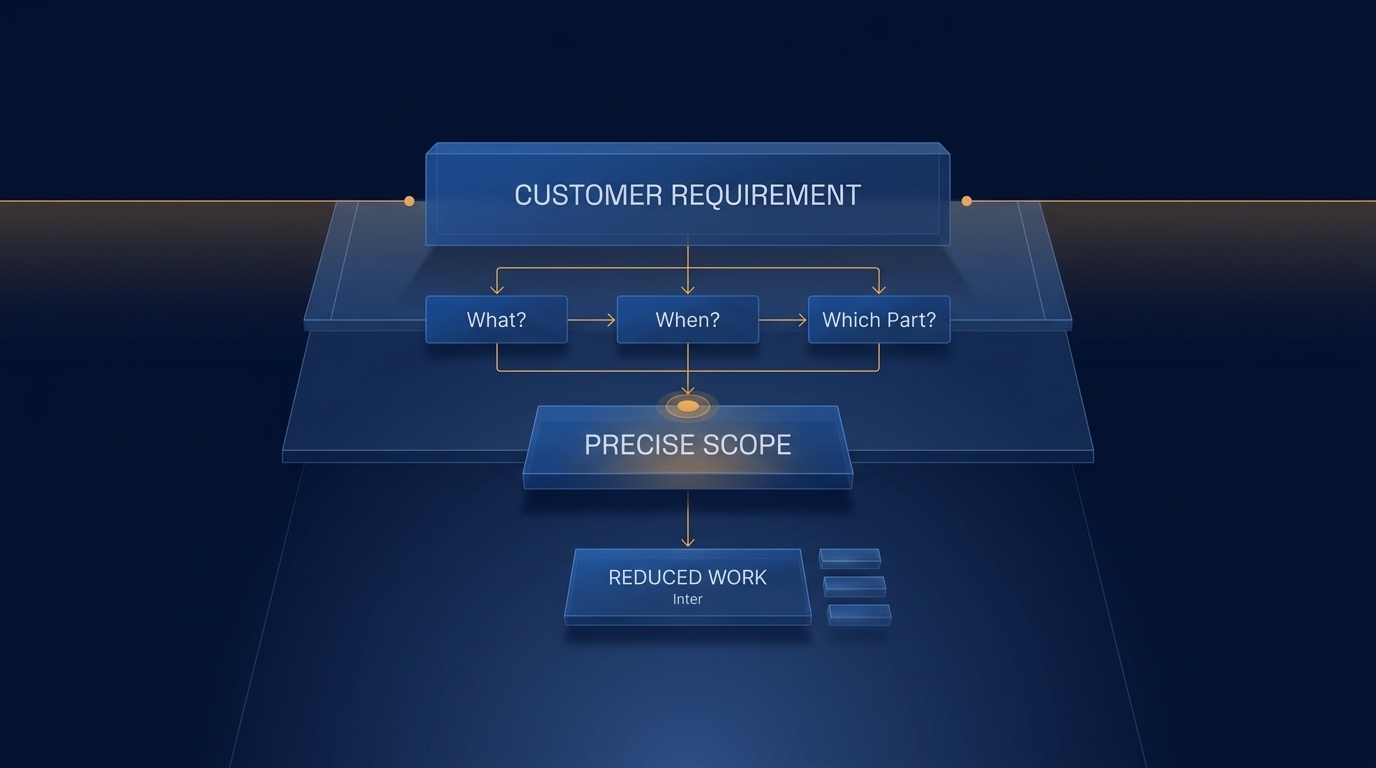
Ask three questions. What does the customer actually require? When do they need it? Which part of your business does the requirement cover? The answers narrow the work considerably. A customer asking for ISO/IEC 27001 certification on your core SaaS product does not automatically require you to certify your internal HR processes, your office network, or a product line still in development.
Over-scoping your Information Security Management System, which is the set of policies, processes and records that define how you manage information security, is one of the most common and costly mistakes startups make. ISO/IEC 27001 has 93 controls across its Annex A. Implementing all of them without first establishing what applies to your specific context wastes preparation budget and extends your timeline. Scope precisely. Implement what applies.
Assess what you already do before you buy anything
Most early-stage software teams already operate practices that are relevant to ISO 27001. They use access controls, they manage deployments through a pipeline, they restrict who can reach production systems. The problem is not usually that the practices are missing. The problem is that the practices are undocumented and the evidence is scattered.
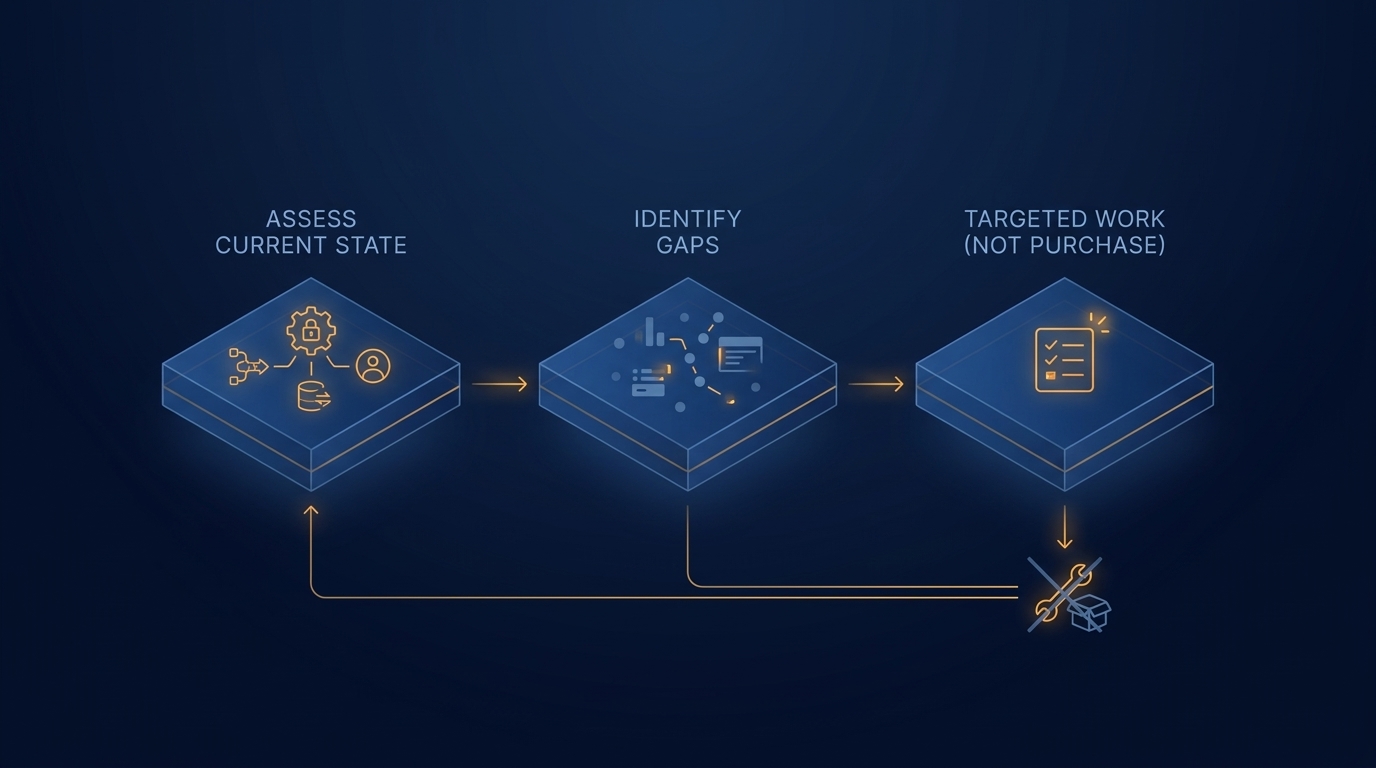
Before you engage a consultant or purchase compliance software, do an honest assessment of your current state. Describe each relevant practice: who owns it, where it operates, and what record exists to support it. A written policy is not evidence that a practice occurred. A dated log, a configuration record, or an approval trail is. Knowing what you already have prevents you from paying someone to build something you built months ago.
This assessment also surfaces your actual gaps. Those gaps are the work you need to do. Gaps hidden behind a completion percentage or a green dashboard indicator will reappear during an independent audit. It is cheaper to find them now.
Use guided interviews to capture company context efficiently
One reason compliance preparation becomes expensive is that the people doing the work do not fully understand how your company operates. A generic consultant will ask you to fill in templates. Those templates will not reflect your actual tech stack, your specific device posture, or the way your team manages access in practice. You will go through multiple iterations before anything fits.
A better approach starts with structured questions that draw out company context before any documentation is produced. At Sinope, our intake process captures how you operate, what infrastructure you use, and where your risk areas sit. That context informs everything that follows. It means the controls we help you focus on are the ones that apply to your actual situation, not a hypothetical company of similar size.
Guided interviews also make evidence collection faster. When a founder or CTO can describe a practice clearly in response to a specific question, the resulting record is more useful than a policy template filled in at speed. It reflects what actually happens, which is what an auditor will want to verify.
Implement only the controls that apply to your scope
This is where cost discipline becomes a technical decision. ISO/IEC 27001 does not require you to implement every control. It requires you to assess which controls apply given your scope and risk profile, document your reasoning in a Statement of Applicability (commonly called an SoA), and implement what you have determined is relevant.
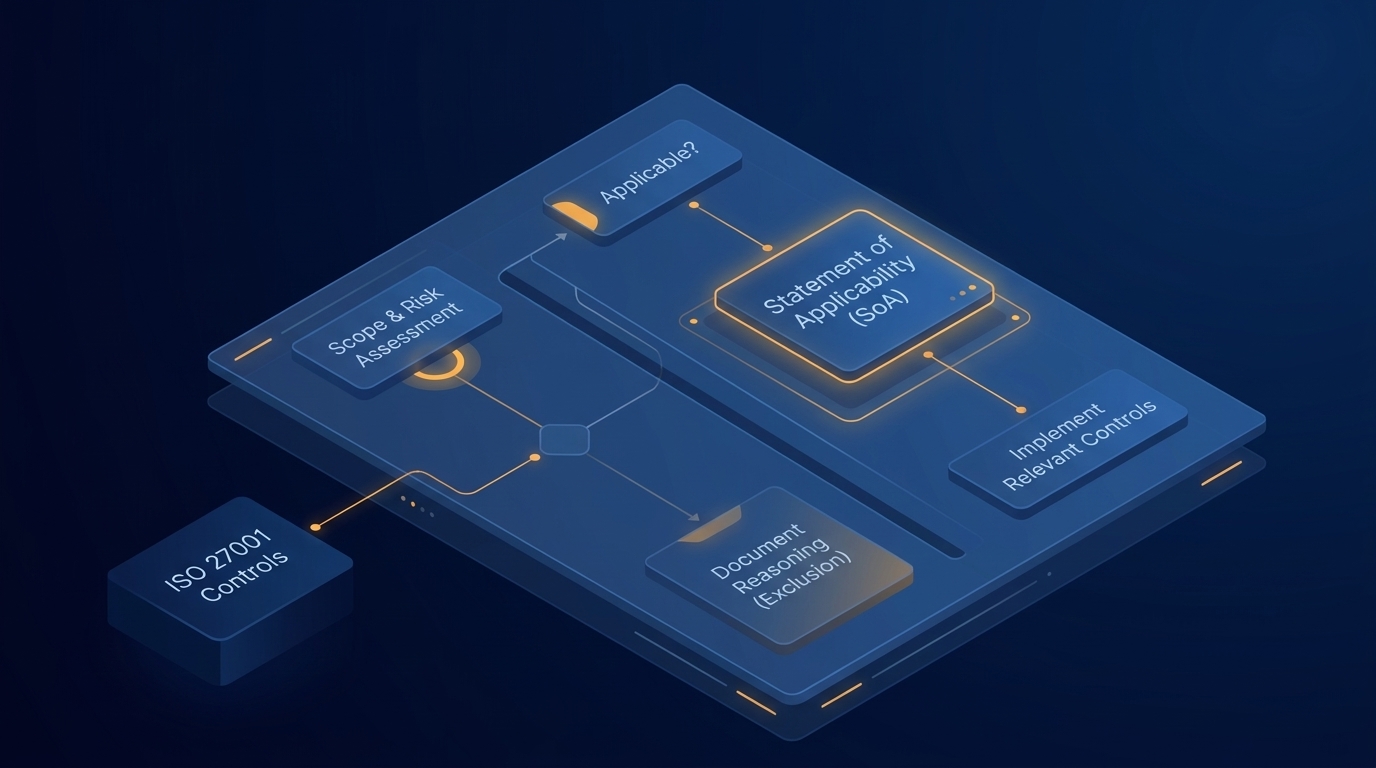
A startup running a cloud-native product with a remote team has a different control set than a financial services firm with on-premises infrastructure and regulatory obligations across multiple jurisdictions. Treating both the same way is a budget problem, not a compliance strategy.
Focus your implementation effort on the controls that address real risks in your actual environment. If a control does not apply, document why. That documented reasoning is itself part of what an auditor reviews. Unjustified exclusions create findings. Well-reasoned exclusions do not.
Assign ownership and keep gaps visible
Compliance preparation stalls when no one owns the next action. In a small team without a dedicated GRC lead, that is the default state. A task gets discussed in a meeting and then sits unresolved because the accountability was unclear.
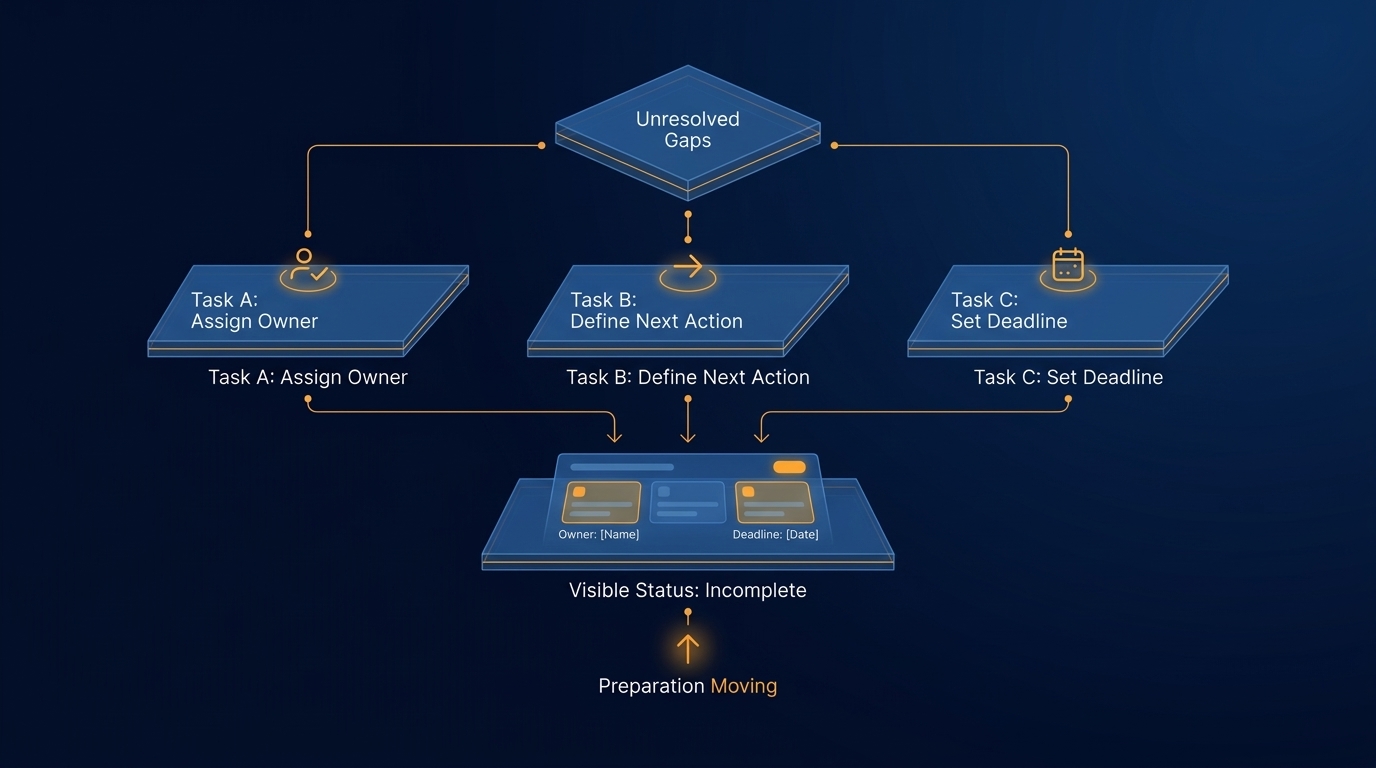
For each identified gap, assign one owner and one next action. Keep unresolved items visible rather than hiding them behind a summary status. If something is incomplete, it should be visible as incomplete, with the owner named and the deadline clear. This discipline has two effects. It keeps preparation moving, and it gives you an honest picture of where you actually stand.
We built Sinope's evidence organisation around this principle. Records are linked to the claims they support. Gaps are labelled as gaps, not marked as in progress with no further context. When you reach an advisory review, the open items are in front of you, not buried.
Use tools that organise evidence, not just documents
There is a meaningful difference between a tool that stores documents and a tool that organises evidence. A document repository gives you a place to put policies. An evidence-oriented system links each record to the claim it supports and shows you what is missing.
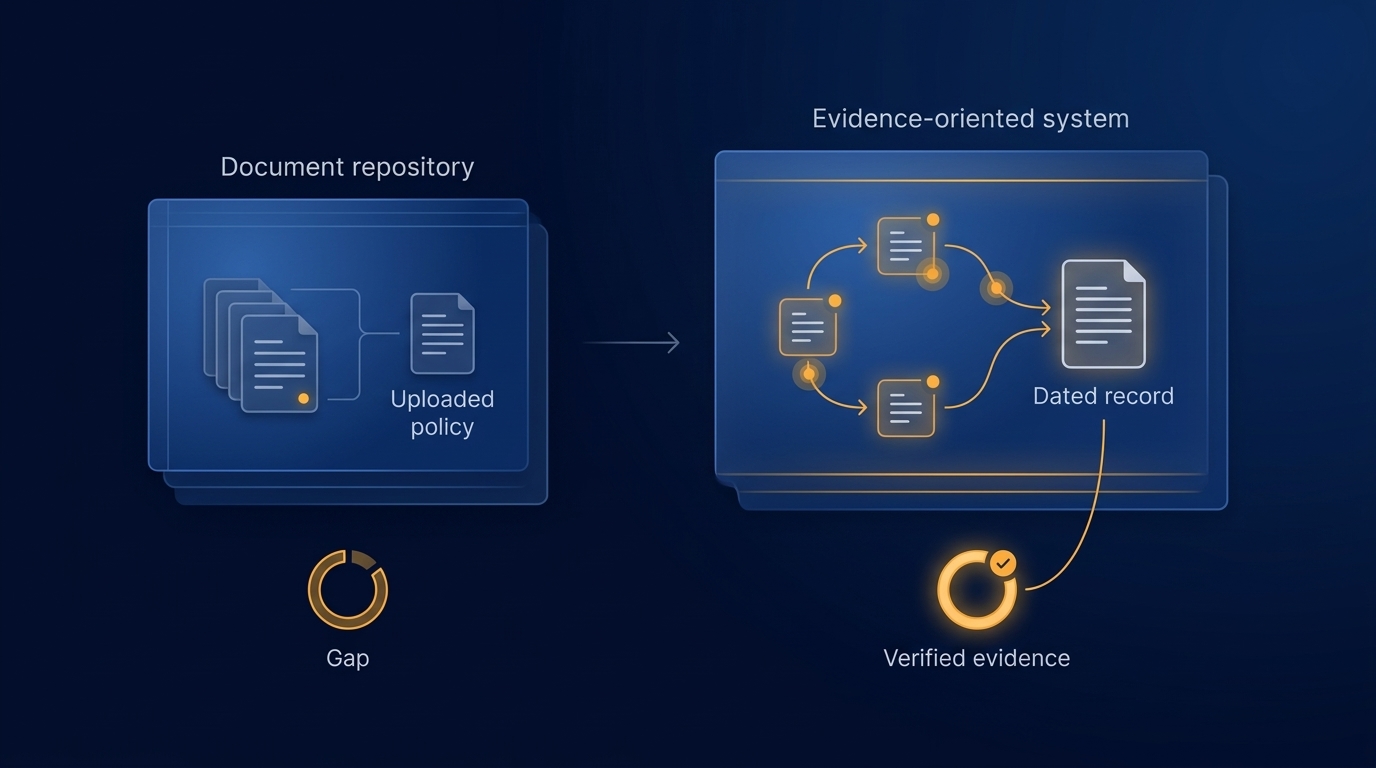
That distinction matters because an uploaded policy does not close an evidence gap. A policy describes an intended practice. Evidence shows that the practice occurred. When an auditor reviews your ISMS, they are looking for both. The policy tells them what you said you would do. The dated record tells them whether you did it.
Organising evidence takes time if you are doing it manually in a shared folder or a spreadsheet. Tools that structure evidence around the relevant control, label each item's status, and flag unresolved decisions reduce that time significantly. They also make it easier for a founder or CTO to review preparation progress without needing compliance expertise to interpret the output.
Preparation costs and audit fees are separate
One source of budget confusion is treating ISO 27001 preparation costs and independent audit fees as the same thing. They are not, and conflating them leads to poor planning.
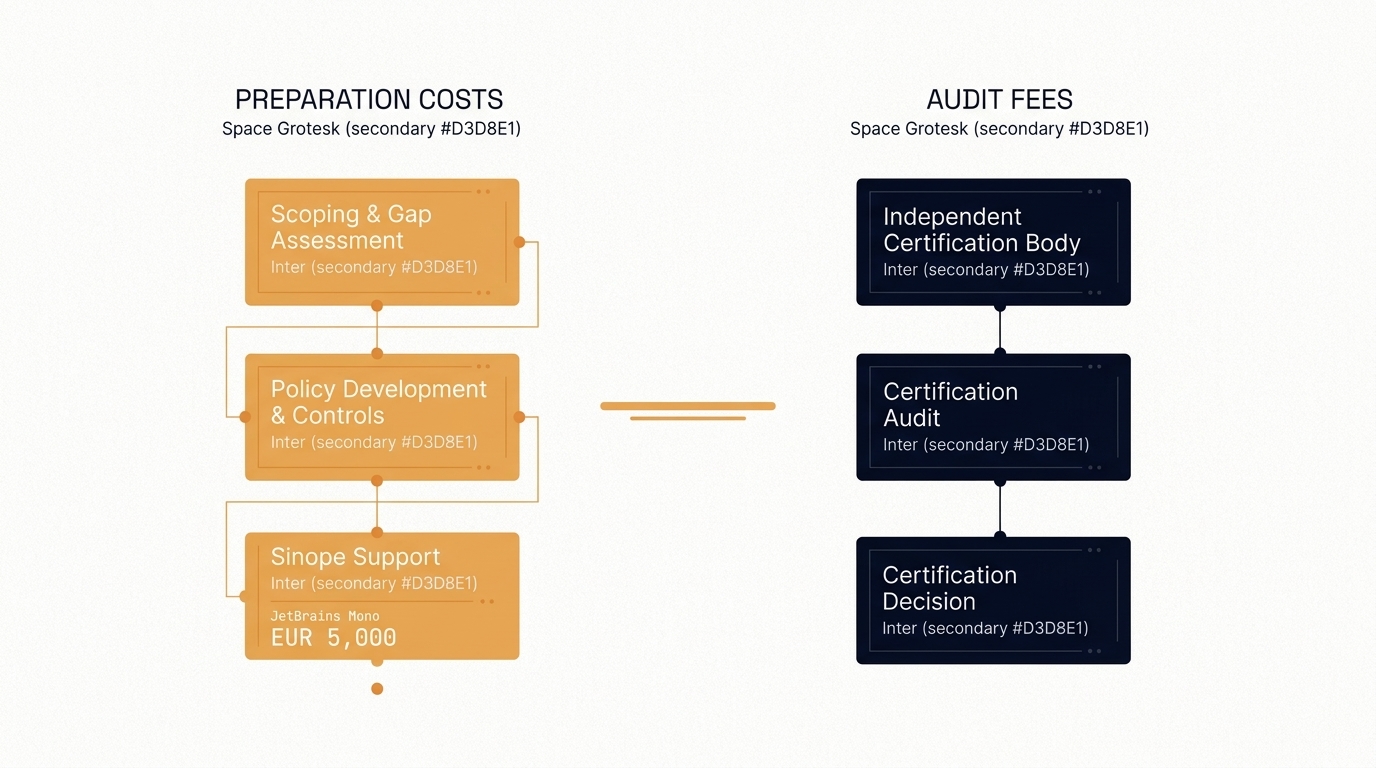
Preparation covers the work you do before an auditor arrives: scoping, gap assessment, evidence collection, policy development, and control implementation. Sinope's target preparation fee is EUR 5,000. Final scope and terms need confirmation. That figure does not include independent audit fees, implementation costs, or the time your team spends on the work.
An independent certification body conducts the certification audit. They make the certification decision. Sinope supports your preparation; the certification outcome belongs to the auditor and to the work you have done.
Understanding this separation helps you plan a realistic budget and set accurate expectations with your customer. If they need certified status by a specific date, that date depends on auditor availability and your own preparation timeline, not just the cost of the tools you use.
The practical sequence
When a customer requirement arrives, the steps that reduce cost without creating risk are: confirm the scope, assess existing practices, identify real gaps, assign ownership, collect dated evidence, and implement only the controls that apply. Each step informs the next. Skipping the scope definition to save time usually creates more work later, not less.
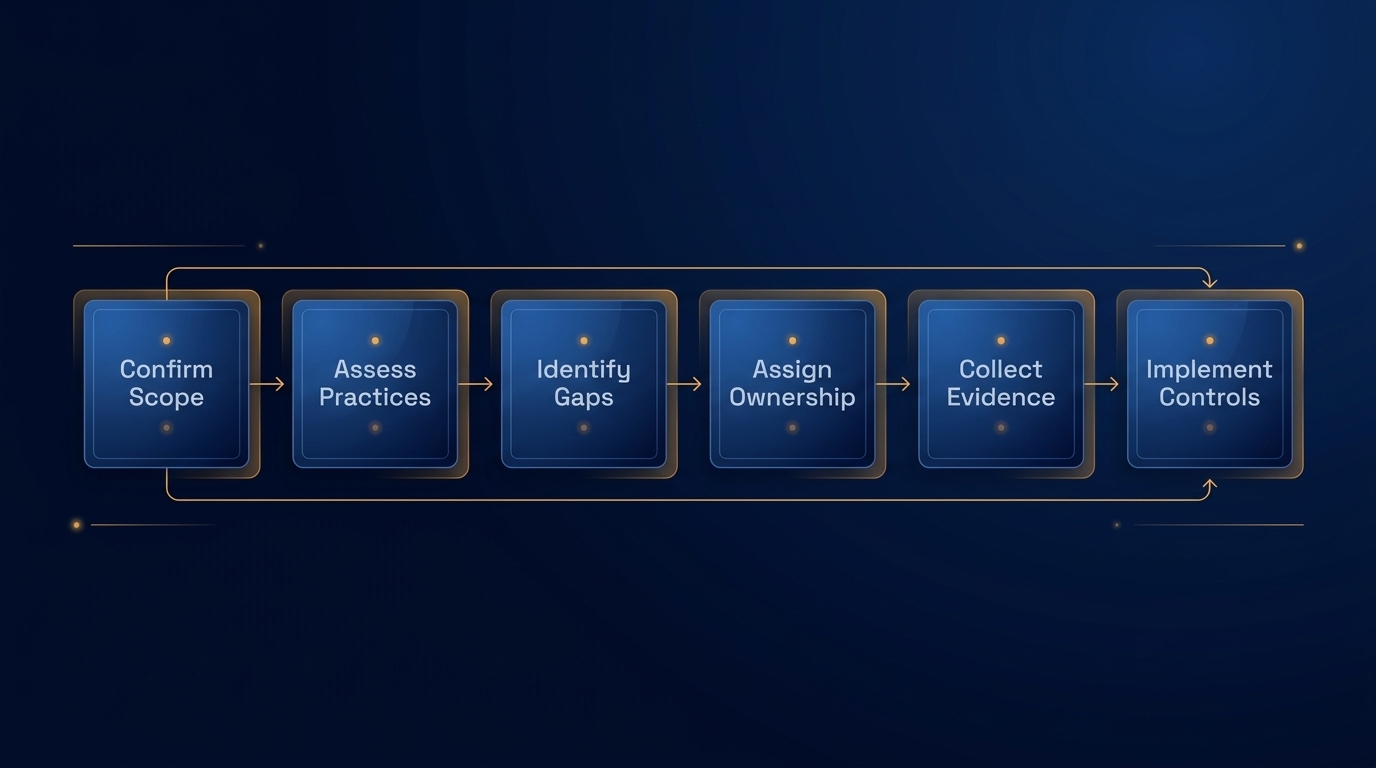
We are developing Sinope to support this sequence through guided interviews, organised evidence, and clear visibility on what remains to be done. AI guidance supports human review. Your team makes the decisions. An independent certification body decides certification.
If you have a customer requirement in front of you and want to understand what preparation would involve for your specific situation, request a cost breakdown at sino.pe. We review every request before we reply.