
A customer asks for ISO 27001 certification, and the instinct is to move fast. You search for a consultant, find a quote that feels too high, look for a cheaper alternative, and end up with a stack of policy templates that do not actually close your evidence gaps. That pattern costs more in the long run than a clear, scoped approach from the start.
For AI startups, the compliance cost question is real and worth taking seriously. The answer is not to cut corners. It is to understand exactly what the requirement covers before spending anything.
Start With the Actual Requirement, Not a Generic Checklist
The single most expensive mistake a startup can make is preparing for more than the customer actually requires. ISO 27001, formally ISO/IEC 27001, is a standard for an Information Security Management System, or ISMS. The ISMS is a defined boundary. It does not automatically cover every product, team, location, or data type your company touches.

Before you buy a tool, hire a consultant, or write a single policy, confirm three things: what the customer needs, when they need it, and which part of your business the requirement covers. A requirement that covers one product and one office is a very different scope from a requirement that covers your whole company.
Scope is where most of the cost lives. Over-scoping your ISMS means more controls to document, more evidence to collect, and more work for the independent auditor whose fees you will pay separately. Getting scope right at the start is one of the most direct ways to keep total costs in check.
Understand What Evidence Actually Means
A policy document is not evidence. It describes an intended practice. Evidence is the dated record that shows the practice occurred: the access review log with a date and an owner, the backup test result with a timestamp, the incident record with a resolution note.

This distinction matters because many teams spend time and money producing documentation that looks complete but leaves critical gaps. When a reviewer or an independent auditor examines your ISMS, they are looking for the record that supports the claim, not just the claim itself.
Efficient evidence management means linking each record to the control it supports and naming the person who owns the next action. A file sitting in a shared folder without context leaves the reviewer to guess why it matters. That guesswork creates delays and sometimes additional audit time, which costs money.
The practical approach is to make gaps visible early. Identify what you already do, describe the actual practice with a named owner, then check what record supports that description. Whatever remains unresolved, name it and assign it. An honest gap list is more useful than a completion percentage that papers over missing evidence.
Use Technology to Reduce Manual Work
Compliance processes that run on spreadsheets and shared drives are not inherently wrong, but they create coordination overhead that grows as your team does. Someone must chase updates, check whether records are current, and keep track of which controls still need attention. On a team of twelve to thirty-five people without a dedicated GRC lead, that overhead lands on whoever has the least protection from it.
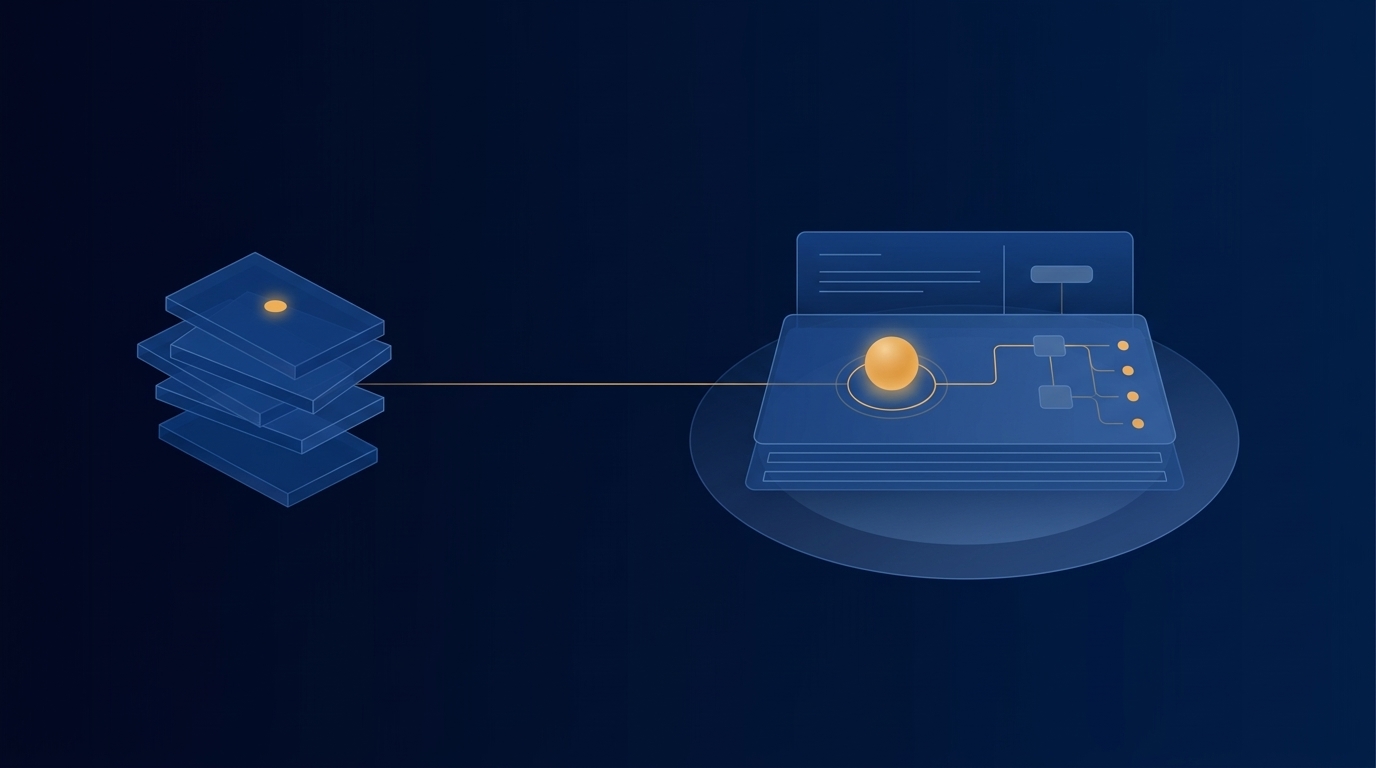
Technology can absorb a meaningful part of that coordination cost. Guided interviews can collect company context systematically, replacing hours of unstructured back-and-forth with a structured input that produces organised records. Automated reminders can surface evidence gaps before they become audit findings. Centralised records make it easier for a reviewer to understand your ISMS without needing to interpret a folder of miscellaneous files.
At Sinope, we are building preparation software that works through guided interviews and organised evidence review. The interviews collect the context that describes your actual practices. The output gives your team a clear view of what you have, what you can support with evidence, and what still needs action. Your team makes the decisions. An independent certification body decides certification.
The goal is to reduce the manual coordination burden without replacing the human judgment that compliance genuinely requires.
Guided Interviews as a Lower-Cost Alternative to Heavy Consultancy
External consultants often charge by the day. For a pre-seed startup without a GRC lead, a full consultancy engagement can feel like the only option. It is not always the right fit, and the cost can be hard to justify before you know what you actually need.

Guided interviews offer a different approach. Rather than paying for a consultant to map your environment from scratch, a structured interview process collects the relevant context from your team directly. You describe your practices, your infrastructure, your data flows, and your current controls in response to specific questions. The output becomes the foundation for your preparation work.
This approach reduces consultancy hours without removing expertise from the process. It works best when the interview output is reviewed by someone who understands the standard, which is why Sinope combines guided input collection with advisory evidence review. The review supports human decisions. It does not replace the independent audit that certification requires.
Our target preparation fee is 5,000 EUR. That covers the preparation work, not the independent audit fees or implementation costs that your team will incur separately. Final scope and terms need confirmation. We review each request before we reply.
Build Compliance Knowledge Inside the Team
External support is useful at the start. Sustainable compliance requires that your team understands the practices they are responsible for. When the person who owns an access control process does not understand why it matters, the record they produce is less reliable and the practice is harder to maintain.

Knowledge sharing does not require a formal training programme. It requires that the people responsible for specific controls understand three things: what the control is meant to achieve, what a good record looks like, and who to contact when something changes. That understanding reduces the number of times a question escalates to an external resource, which directly reduces ongoing compliance costs.
This is particularly relevant for AI startups, where the technical environment can change quickly. New model integrations, new data sources, and new third-party tools each have potential implications for your ISMS. A team that understands the underlying principles can identify those implications early, rather than discovering them during an audit.
Building that understanding also reduces preparation time when a new customer requirement arrives. A team that already knows its own practices and evidence is in a much stronger position than one that must reconstruct the picture from scratch.
The Cost Equation for AI Startups
ISO 27001 preparation costs for a startup depend on scope, existing practices, team capacity, and the tools and support you use. The total includes preparation work, independent audit fees, implementation costs, and team time. These are separate line items. Conflating them produces a number that is hard to act on.
The preparation cost you can most directly influence is the work your team does before the audit begins. That means getting scope right, collecting genuine evidence, using technology to reduce coordination overhead, and building enough internal knowledge to maintain the practices you document.
A useful first step is to request a cost breakdown that reflects your actual situation rather than a generic estimate. At Sinope, we review each cost request before we reply, because the right answer depends on your specific scope and starting point.
If you have a customer requirement in front of you and want to understand what preparation would involve, request a cost breakdown at sino.pe. If you want to talk through the requirement before that, Jaimie's thirty-minute booking link is available for a direct conversation.
Start with the requirement. Confirm the scope. Then look at what you already have before you decide what to build.